


An atmosphere of feeling of anticipation. Apparent is the cold breath emanating from my competitors as they do the "starting line" jiggle on the beginning point.
A rapid twitch of the hips.
I'm participating in my local Saturday morning race and I mean business. Three, two, one...
Hold on. I must start my device. So does the guy next to me.
The person behind us tuts. I'm not moving until… there! Signal acquired, I'm off.
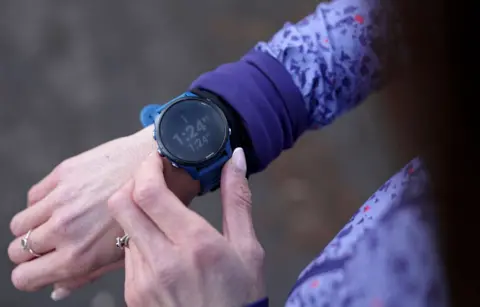
Amidst the crowd, it's hard to spot a wrist without a fitness tracker on it. And this extends beyond us participants who rely on them.
We're witnessing a booming, multi-billion dollar market. Brands like Apple Watch are prevalent, each with an broad range of various models to suit a spectrum of needs. According to how high tech the device you choose, price tags can range from £100 to thousands of pounds.
"I find it infuriating, I'm unable to stop checking."
"It comforts me… It acts as a friend supporting me."
"I wish it wouldn't say about a poor sleep."
Just some of the comments I've received from other smartwatch wearers when I question what they feel about theirs.
The Data Dilemma
My current opinion on my own device? At this moment, annoying. It's telling me I'm not hitting my target, causing me to question whether the foliage I'm running below are interfering with my GPS connection.
Countless individuals of us fasten these small monitors onto our arms and keep them on constantly, apparently comfortable with the fact they're continuously tracking us.
Long past are the days when we relied on them exclusively to give us an rough count of our pedometer reading. Currently, they can analyse our nightly rest, blood pressure, glucose levels, our VO2 max.
It's tricky to find a health indicator they aren't designed to measure.
But are they able to do what they claim to do? And are the statistics we analyse a accurate representation of our actual health? Do they enhance our overall health, or do the plethora of metrics and motivational messages just increase our daily stresses?

A Love-Hate Relationship
"I find myself getting a a little preoccupied with mine," one user reveals.
While she appreciates how her device records her exercise, she finds some of its other features "overwhelming" at times - a feeling that became apparent during a pregnancy.
Until she found out she could put it into a specific mode, her smartwatch constantly alerted her she was not being productive enough. Now, the watch insists her she's had a poor sleep score.
"I am caring for a young baby, it's unnecessary for me to be informed my sleep was poor," she says. "I know that only too well."
Why doesn't she just stop wearing it?
"I could, perhaps, but I'm in this push-pull dynamic with it," she explains. "I appreciate it for its exercise data, I sometimes question whether the additional features it can now do is perhaps overkill for me."
Inside the Device
Every device of smartwatch has its own novel way of measuring your vitals and interpreting your data, but the most use sensors on the reverse of the watch.
They typically shine small, green LED lights onto your wrist which can monitor blood flow, recording your BPM. More advanced devices detect changes in the electrical current that passes over the skin to gauge your recovery state.
Expert Perspectives
One expert says that overall for smartwatches, it's a "fine balance" - while the continuously improving tech could actually aid early diagnosis, "spotting abnormalities before we feel unwell", it could also turn us the tracked into the "anxious healthy".
He points out that some of the latest wearables can carry out tests like electrocardiograms (ECGs), which constantly monitor how healthy the heart is. They can alert if someone is experiencing atrial fibrillation (AF), where there is abnormal electrical activity in the heart causing an arrhythmia.
This does not automatically signal someone is about to have a heart attack, but it can give an early warning they might be more susceptible of a blood clot in the years to come.
But how to understand these readings is not straightforward. The expert fears that as additional features are added, people may find it hard to fully comprehend their data.
"I remain sceptical that being able to monitor so many things is such a beneficial thing," he says.
A clinical psychologist studying wearable tech agrees. A study into the impact of wearable tech on a cohort of cardiovascular patients suggested a minority of those who were given devices to monitor their heart health experienced heightened worry and were "more inclined to use healthcare resources".
She identified a vicious circle with her patients - they noticed a concerning reading on their watch. They grew concerned. Their pulse rose. They got increasingly anxious. They looked a second time, and their anxiety went up again.
"If we see data about ourselves that we can't properly interpret then, naturally, we are going to seek clarification," the psychologist says. "We look, we obsess - it becomes a self-fulfilling prophecy."


